
Message from the President of University of Tsukuba
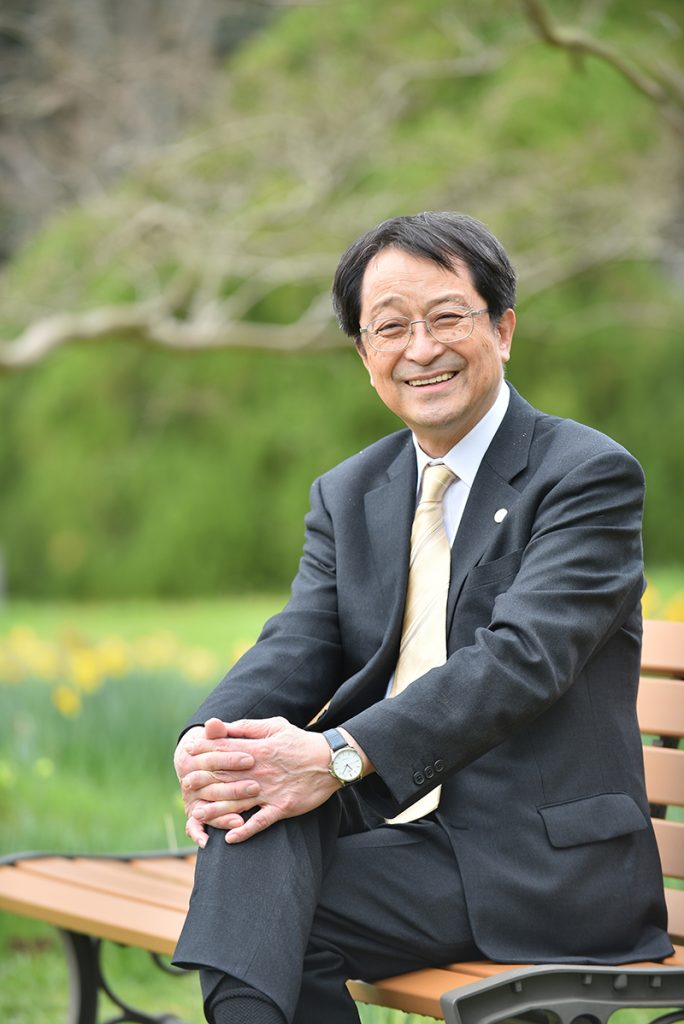
NAGATA Kyosuke
President, University of Tsukuba
It is a great honor for University of Tsukuba to host the 7th Japan–Mexico Rectors’ Summit from September 27 to 30, 2026.
Grounded in the 2010 Japan–Mexico Joint Statement on the Strategic Global Partnership and Economic Growth in the 21st Century, this summit was first convened in 2011 and has been serving an important platform for university leaders from both countries at the level of presidents and rectors and promoting concrete and sustainable academic collaboration. Building on more than four centuries of exchange between Japan and Mexico, we now have an opportunity not only to reaffirm our partnership, but also to advance it further.
The theme of this summit, “Solving Global Challenges and Creating a New Future Perspective through Co-creation between Advanced Science & Technology and GLocal Society,” reflects a shared expectation that universities will play an active role in addressing the pressing issues of our time. Today’s challenges including public health, climate change, energy and food security, technological disruption, and social inequality are complex and deeply interconnected. Solving them requires collaboration across borders, sectors, and disciplines. Dialogue among university presidents and rectors on these shared priorities will provide an important foundation for translating collective perspectives into long-term strategies and concrete institutional initiatives.
Through collaboration between universities in Japan and Mexico, we can generate tangible benefits that extend beyond academia. By combining Japan’s and Mexico’s strengths, our institutions can accelerate the transition from research to practical solutions with meaningful societal impact. Joint efforts can contribute to solving of aforementioned global issues. At the same time, such collaboration will foster globally competent talent equipped not only with technical expertise, but also with intercultural understanding and the ability to respond to rapidly changing societal needs. In this way, Japan–Mexico university cooperation can contribute to stronger bilateral relations while offering a model of international academic partnership that benefits the global community.
To give concrete form to this shared vision, University of Tsukuba would try to advance initiatives that translate dialogue into action. The University is located in Tsukuba Science City, one of Japan’s most concentrated research environments, home to approximately 160 academia, industry, and government research institutions, so that the University has experiences in providing a strong and novel framework for co-creation that bridges advanced science and societal needs. We hope that this summit will serve as an entry point for participating universities to engage with a new framework beyond borders and develop long-term collaboration.
I warmly encourage all participants to make full use of this opportunity to build concrete partnerships. May the discussions in Tsukuba lead to meaningful outcomes, further strengthen Japan–Mexico cooperation, and contribute to a more resilient, inclusive, and sustainable international society in the years ahead.
Kyosuke NAGATA
President, University of Tsukuba